
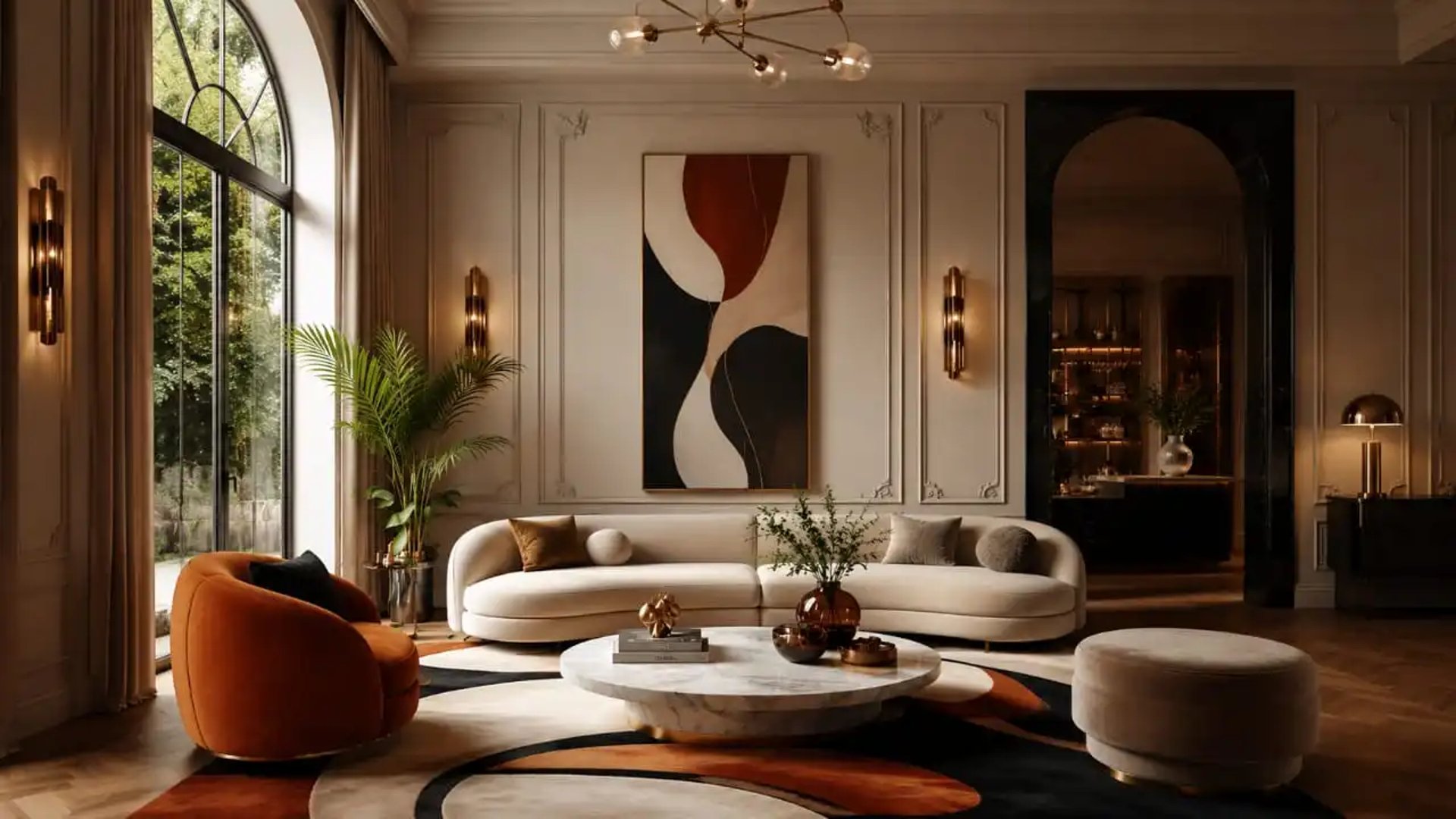
How to Create a Neo Deco Interior Design: Complete Neo Deco Style Guide 2026
Neo Deco in 2026: A New Language of Refined Expression
In 2026, Neo Deco has emerged as one of the most compelling directions in contemporary interior design. It is not a revival of the past, but a reinterpretation shaped by present-day living—where clarity, warmth, and emotional comfort are as important as visual structure.
Inspired by Art Deco, Neo Deco preserves the essence of geometry, symmetry, and material richness, while softening its expression for modern interiors. What once felt theatrical has become more intimate; what was once ornate is now composed.
At its core, Neo Deco is no longer about decoration. It is about balance, proportion, and atmosphere—a quiet orchestration of form and material that feels both intentional and lived-in.
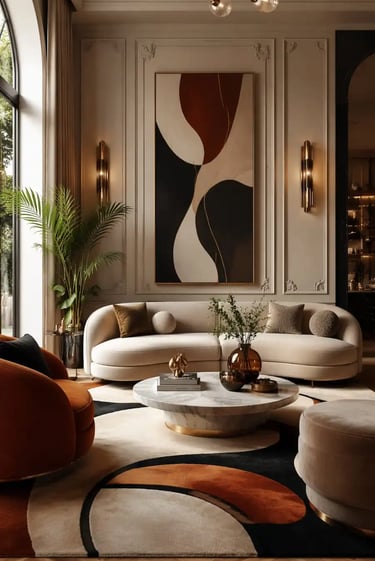
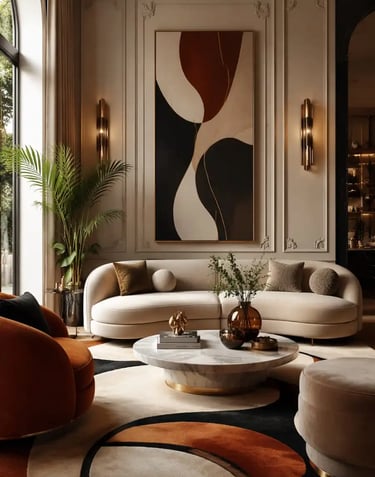
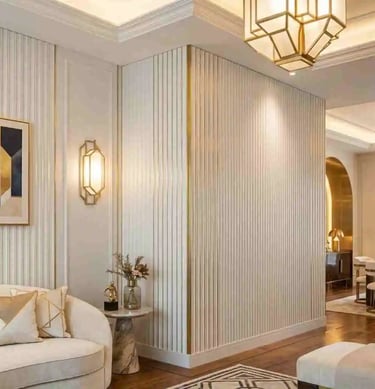
Neo Deco interiors in 2026 are fundamentally built on structure, where architecture becomes the silent framework that defines everything else within the space. Rather than relying on decorative accumulation, the design is shaped through proportion, rhythm, and geometry, allowing walls, ceilings, and openings to guide the eye in a subtle and continuous flow. Arches soften transitions between spaces, vertical lines introduce height and clarity, and repeated structural elements create a sense of visual coherence that feels calm and grounded. Decoration only enters at the final stage, and even then, it remains restrained, serving to enhance the architecture rather than compete with it, resulting in interiors that feel expressive yet composed, and refined without ever appearing forced.
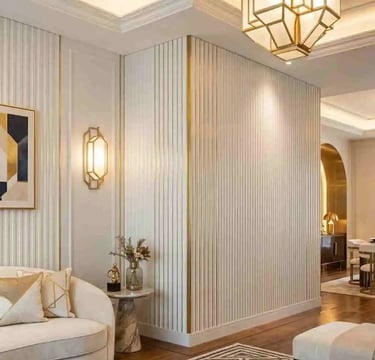
The Core Principle: Structure as the Foundation of Elegance
Materials: Tactile Luxury and Subtle Contrast
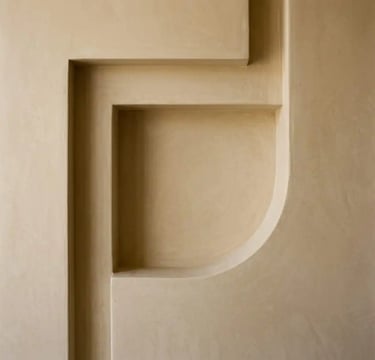
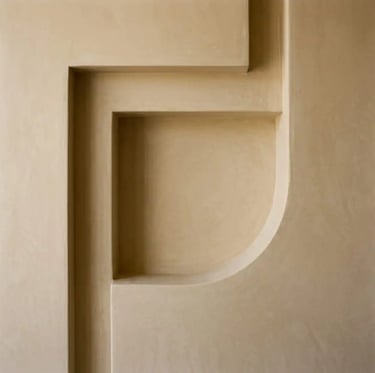
In Neo Deco, form plays a crucial role in shaping atmosphere, particularly through the use of controlled curves that introduce softness without disrupting structure. Arched openings, rounded furniture silhouettes, and fluted or ribbed surfaces are not decorative gestures but intentional design choices that create rhythm and continuity throughout a space. These curved elements interact with stronger geometric lines, creating a balance between stability and fluidity that defines the modern Neo Deco language. Even a single curved object, whether a chair, a mirror, or an architectural niche, can subtly transform the perception of a room, adding movement and elegance without compromising its clarity.
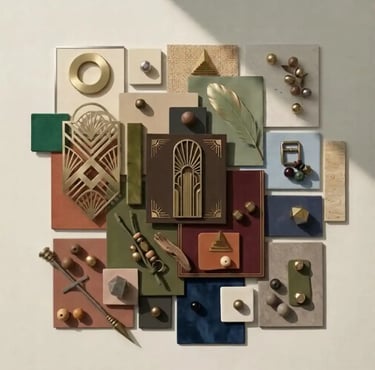
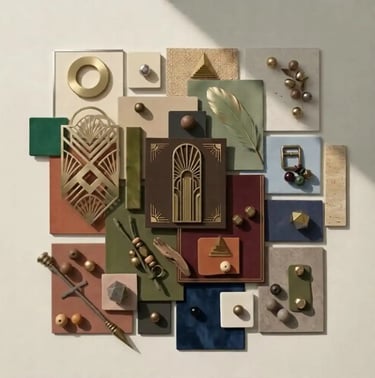
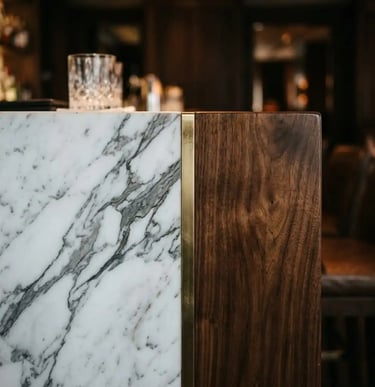
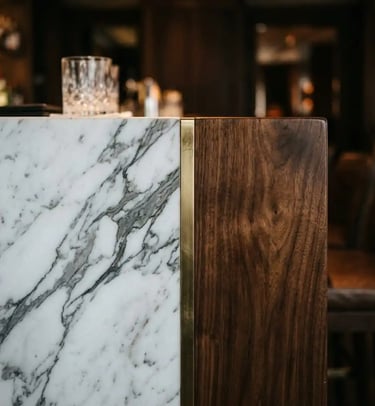
Materiality in Neo Deco is defined by restraint, depth, and contrast rather than visual excess, where every surface is chosen for its tactile and atmospheric quality rather than its decorative impact. Stone such as marble or travertine introduces permanence and quiet strength, while rich woods like walnut or dark oak bring warmth and grounding to the composition. Metallic accents in brass, bronze, or chrome appear sparingly, catching light in a subtle and deliberate way rather than dominating the space. The true sophistication of the style lies in the dialogue between materials, where matte meets polished, soft meets structured, and natural textures meet refined finishes, creating interiors that feel layered, balanced, and deeply intentional.
The Color Palette: Warm Modernity and Atmospheric Depth
The Neo Deco palette in 2026 reflects a clear evolution toward warmth, earthiness, and emotional resonance, moving beyond the colder interpretations of earlier modern interiors into something more grounded and human. Alongside traditional jewel tones such as emerald, sapphire, and deep burgundy, a new spectrum has emerged that defines the contemporary expression of the style, including warm neutrals like cream, ivory, taupe, and soft beige, as well as earthy tones such as mocha, walnut brown, espresso, and caramel. This palette is further enriched by clay-inspired hues like terracotta, muted burnt orange, dusty sienna, and soft clay, alongside atmospheric tones such as powder blue, muted blush, and warm grey. These colors are never used in isolation but are layered carefully to create depth and harmony, for example through a foundation of cream tones combined with walnut wood, softened by terracotta accents and refined with brass details, resulting in an interior that feels both modern and emotionally grounded.
Furniture: Sculptural Presence and Visual Breathing Space
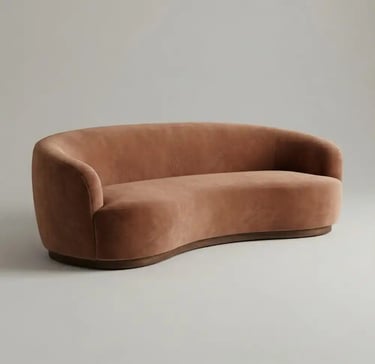
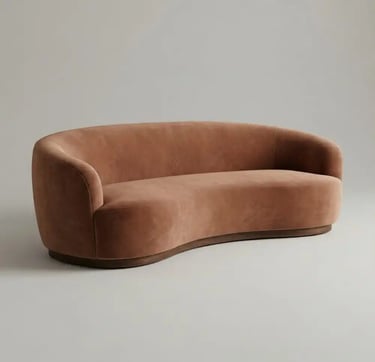
Furniture in Neo Deco interiors is defined by clarity of form and intentional placement, where each piece is selected not to fill space but to define it. Sofas often feature curved or tailored silhouettes that introduce softness, while tables and chairs maintain a structured, sculptural presence that reinforces balance within the room. Rather than relying on quantity, the composition depends on restraint, allowing each piece to exist with visual clarity and purpose. A single well-chosen element, such as a velvet sofa in a warm clay tone or a walnut coffee table with clean architectural lines, can establish the entire mood of a space, especially when paired with sufficient negative space that allows the design to breathe.
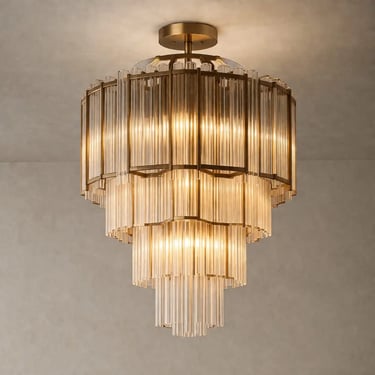
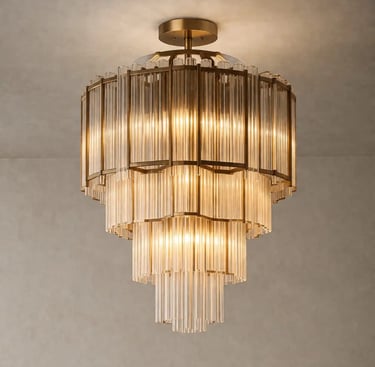
Lighting in Neo Deco is approached as a layered composition rather than a single source of illumination, where each layer contributes to atmosphere, depth, and material enhancement. Sculptural ceiling fixtures provide structure and presence, while wall sconces and table lamps introduce softness and intimacy, creating a balanced interplay between light and shadow. Glass, metal, and diffused finishes allow illumination to interact gently with surrounding surfaces, revealing texture and color without harsh contrast. The objective is not brightness but atmosphere, where lighting becomes an invisible architect that shapes mood and reinforces the emotional tone of the interior.
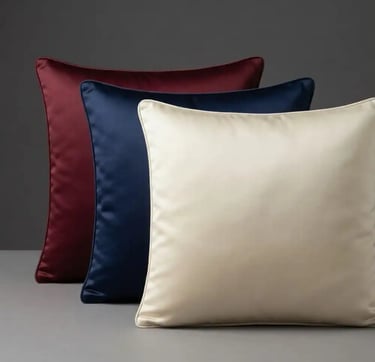
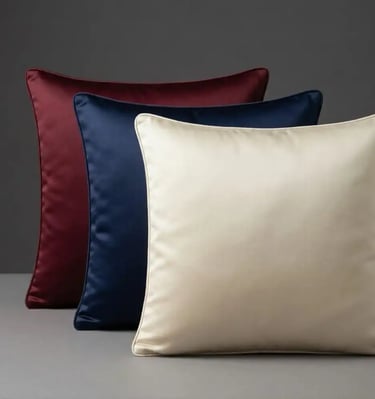
Textiles in Neo Deco interiors introduce warmth, tactility, and emotional depth into structured spaces, softening architectural precision through layered materials and subtle contrast. Upholstery often sets the foundation, such as a curved sofa in terracotta velvet, a cream bouclé armchair, or a structured linen sofa paired with walnut wood detailing, each choice shaping the room’s tone through material and form. Cushions and pillows refine this atmosphere with controlled variation, for example cream linen pillows combined with a single caramel or burnt-orange velvet accent that adds quiet depth without disrupting harmony. At floor level, rugs and carpets anchor the composition, such as a large neutral wool rug defining a seating area or a muted geometric carpet in beige and clay tones grounding darker furniture. Curtains complete the layering, with floor-to-ceiling drapes in warm ivory or soft taupe diffusing light and enhancing vertical elegance. Together, these textile elements—pillows, upholstery, rugs, and drapery—create a balanced emotional softness that complements Neo Deco’s structured architectural language.
Textiles: Softness as Emotional Balance
Lighting: Atmosphere Through Precision
Wall Decor: Vertical Identity and Visual Rhythm
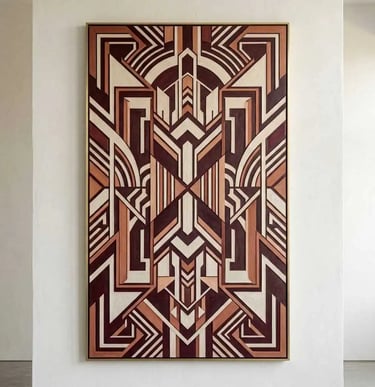
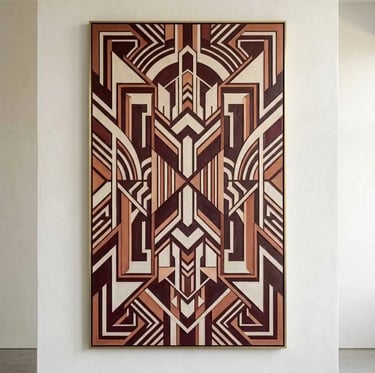
Wall decor in Neo Deco interiors plays a defining role in establishing identity and visual balance, transforming vertical surfaces into composed architectural statements. Rather than overcrowding walls, the approach favors scale and intention, such as a single large-format artwork above a console, a geometric composition in muted tones, or black-and-white photography that emphasizes form, contrast, and shadow. Mirrored panels or softly reflective surfaces may also be introduced to expand light and add depth without disrupting calmness, often framed in brass or bronze to maintain material continuity. In this way, wall decor becomes less about decoration and more about reinforcing rhythm, proportion, and atmosphere within the space.
Forms and Silhouettes: Controlled Softness
Greenery in Neo Deco interiors is carefully curated to introduce life and softness without disrupting architectural clarity. Plants such as the Fiddle Leaf Fig, Bird of Paradise, or Snake Plant are favored for their sculptural presence, offering strong silhouettes that complement the geometry of the space. Rather than acting as decorative additions, they are positioned intentionally to reinforce balance, often placed near architectural lines, corners, or focal points where they enhance rather than interrupt composition. Their presence introduces a natural counterpoint to structured interiors, grounding the design in subtle organic movement.
Greenery: Structured Nature
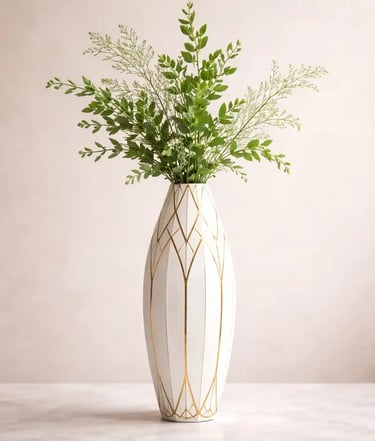
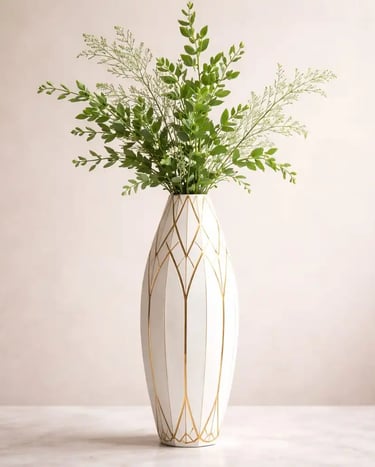
Accessories in Neo Deco interiors are selected with precision, emphasizing form, material, and emotional weight rather than quantity. Objects such as glass vessels, stone trays, sculptural ceramics, or metallic accents in brass and bronze are used sparingly to complete surfaces without visual clutter. Each piece is chosen for its ability to contribute to the overall composition, ensuring that even the smallest detail feels intentional and aligned with the broader design language. This restrained approach allows space, light, and material to remain the true focus of the interior.
Accessories and Decor: The Art of Restraint
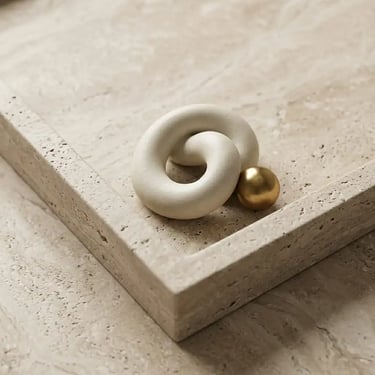
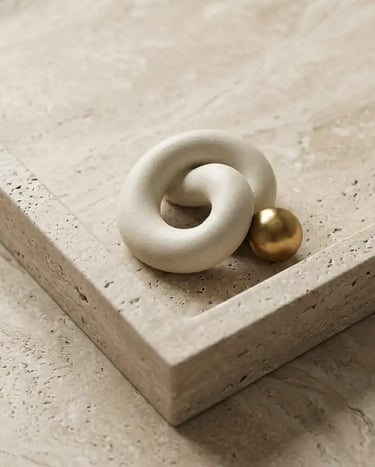
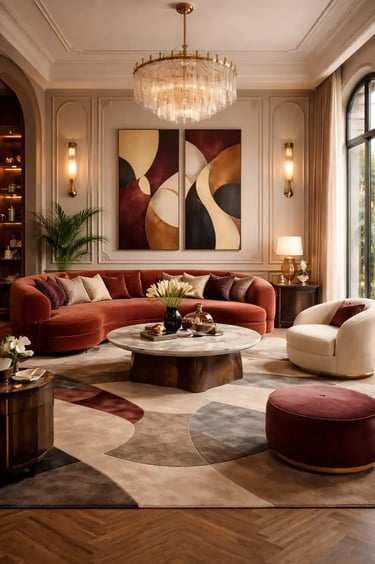
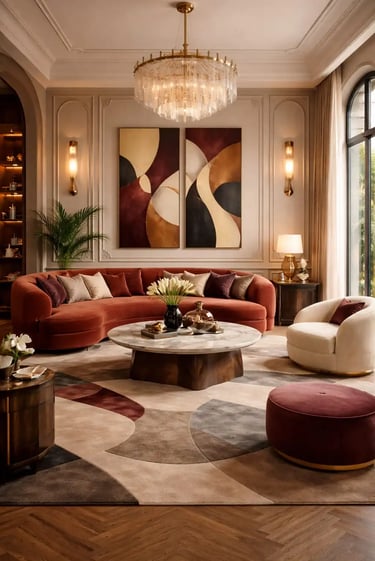
Creating a Neo Deco interior today does not require a full transformation but rather a gradual layering of intentional decisions that shape atmosphere over time. It often begins with a single defining element, such as a curved sofa, a fluted wall detail, or a sculptural lighting piece, which establishes the visual foundation of the space. From there, contrast becomes essential, combining soft textures with structured forms, warm tones with neutral foundations, and matte surfaces with subtle metallic accents. The palette should remain cohesive, centered around warm neutrals, earthy tones, and muted highlights, while spacing is treated as an active design tool that allows each object to exist with clarity and presence. Through this approach, even a simple interior can evolve into a Neo Deco expression that feels balanced, atmospheric, and quietly expressive.
How to Create a Neo Deco Interior in 2026
Final Perspective: The New Definition of Elegance
Neo Deco in 2026 is not defined by replication but by interpretation, reflecting a contemporary desire for interiors that are structured yet warm, refined yet human, expressive yet controlled. Its elegance emerges not from ornament but from intention, expressed through material choices, spatial balance, and thoughtful restraint. Ultimately, it offers a way of designing that feels both composed and deeply personal, where elegance is not applied but gradually built through awareness, proportion, and quiet confidence.
Eftelt
Home Decoration
Helping individuals create homes that feel personal, expressive, and deeply connected to who they are.