Explore Contemporary kitchen
A contemporary kitchen is defined by clarity, precision, and quiet sophistication. It is a space where function is resolved through design, and where every element—from layout to material—contributes to a sense of order and ease. Clean lines, balanced proportions, and uninterrupted surfaces create an environment that feels open yet grounded. Light moves freely across matte finishes and natural textures, revealing subtle depth without visual distraction. The result is a kitchen that supports movement, enhances daily routines, and maintains a composed, elegant presence at all times
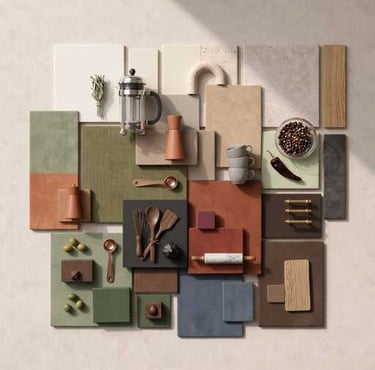
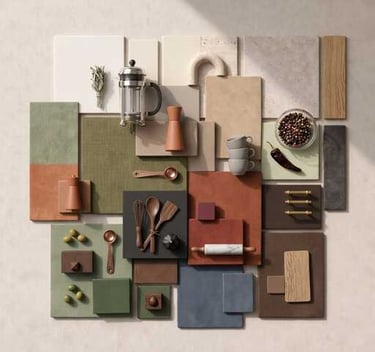
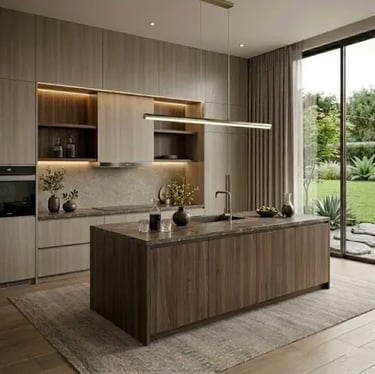
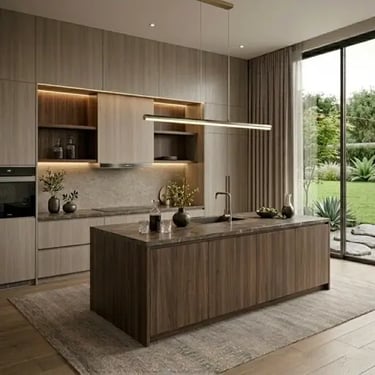
A contemporary kitchen palette is centered on controlled neutrals that create a calm and cohesive base. Warm white, off-white, greige, beige, and soft grey are commonly used across walls and upper cabinetry to reflect light and maintain brightness. These are often paired with deeper tones such as matte black, charcoal, or walnut to introduce contrast, for example through a darker kitchen island or lower cabinets in wood veneer. Subtle accents like olive green, dusty blue, or terracotta may appear in small elements such as seating or accessories, adding warmth without dominating the space. The overall effect is balanced and consistent, where color supports the structure of the kitchen rather than distracting from it.
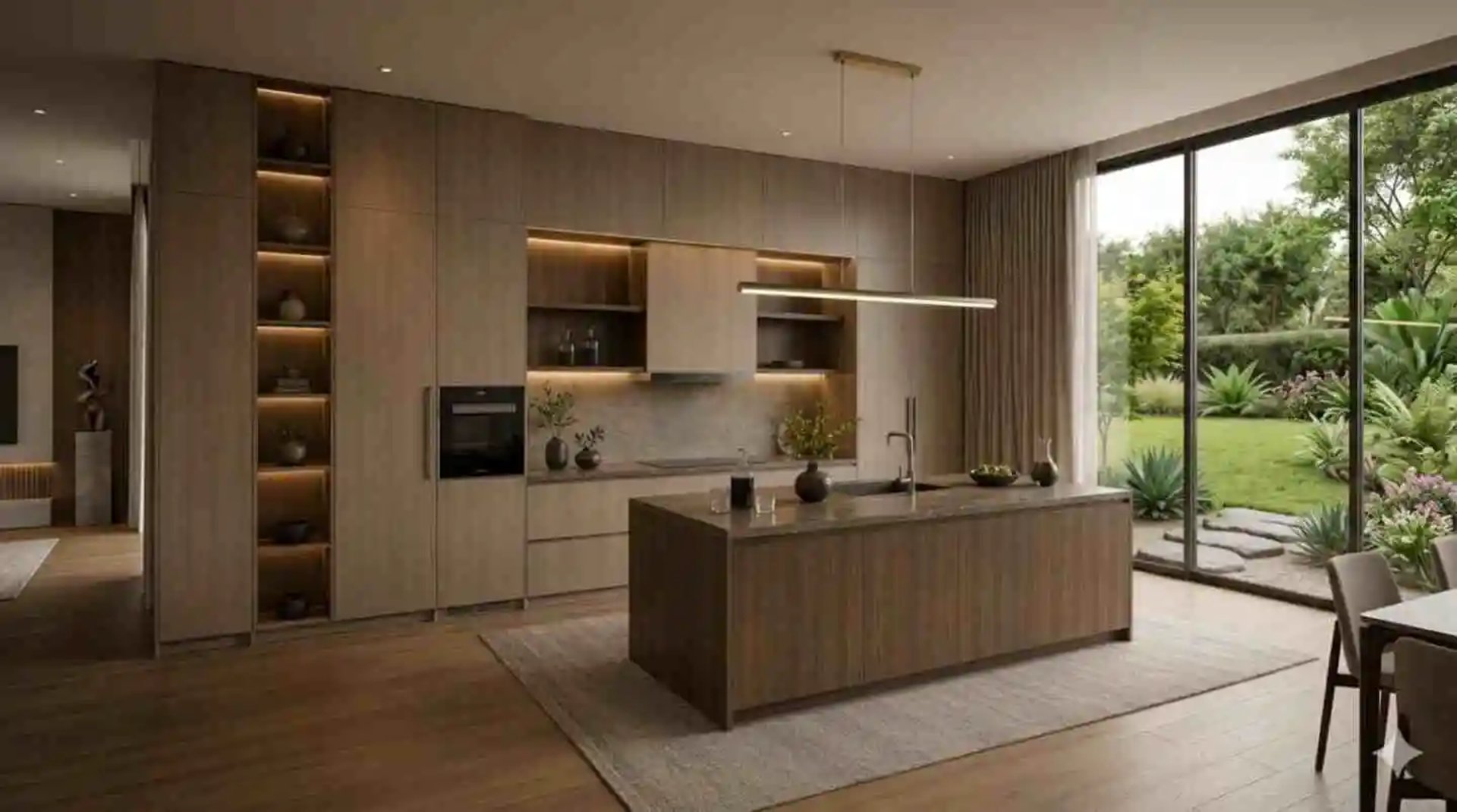
A contemporary kitchen is defined by flat surfaces, integrated elements, and a clear, uninterrupted visual structure. Cabinetry is typically handleless, using recessed grooves or push-to-open systems to maintain clean lines, while appliances are often built into full-height units or concealed behind matching panels. Layouts are designed for efficiency, commonly featuring a central island or a linear arrangement that allows smooth movement between cooking and preparation areas. Materials are repeated for cohesion, such as extending a quartz countertop into a full-height backsplash or matching wood cabinetry with open shelving. Lighting is layered to support both function and atmosphere, and decorative elements are used selectively to maintain balance. The result is a kitchen that feels organized, modern, and easy to use.
What Defines a Contemporary Kitchen?
Color palette
Cabinetry
Lighting
Seating


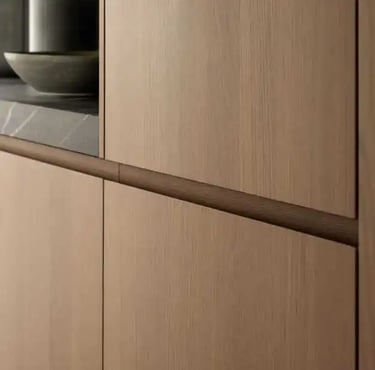
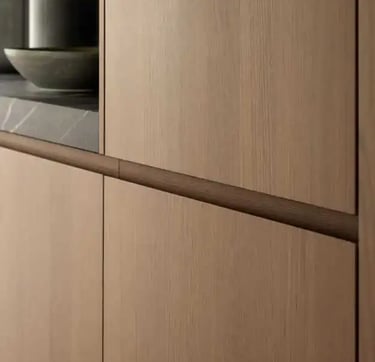
Cabinetry in a contemporary kitchen is defined by simplicity, precision, and continuity. Flat-panel doors without visible handles create a seamless surface, often achieved through integrated finger pulls or push-to-open mechanisms. Finishes typically include matte lacquer in neutral tones or natural wood veneers such as oak for a lighter look or walnut for a richer tone. Full-height cabinetry is frequently used to house appliances and storage, forming a clean vertical plane, while upper cabinets may be minimized or replaced with open space to keep the design visually light. A common example is a combination of white upper cabinetry with walnut base units, creating contrast while maintaining cohesion.
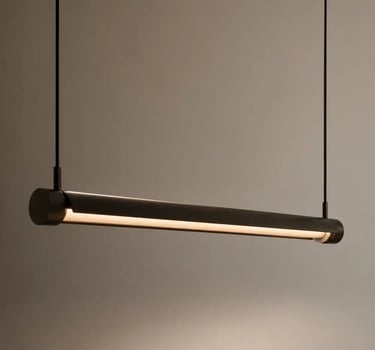
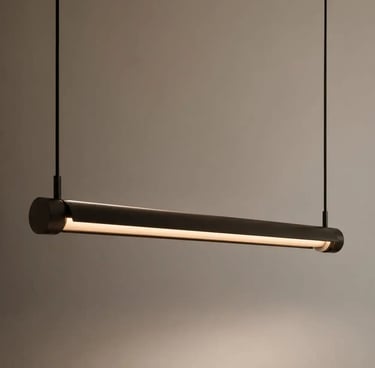
Lighting is carefully layered to ensure both functionality and atmosphere. Recessed ceiling lights provide even illumination across the kitchen, while concealed LED strips installed under cabinets or shelves offer direct task lighting for work surfaces. Above an island, pendant lighting is often introduced as a focal point, with simple cylindrical fixtures in matte black or brushed brass, or a slim linear suspension for a more architectural look. The lighting temperature is typically warm, allowing materials such as wood and stone to appear natural and inviting rather than harsh or clinical.
Seating is usually integrated into the kitchen through an island or breakfast bar, where it supports both practical use and social interaction. Bar stools are selected for their clean silhouettes and material quality, often featuring slim metal frames paired with wooden seats or upholstered finishes in leather or neutral fabrics. Designs tend to remain visually light, such as backless stools or low-back options that do not interrupt sightlines. A typical arrangement might include two or three evenly spaced stools in a consistent finish, aligned with the proportions of the island.
Décor
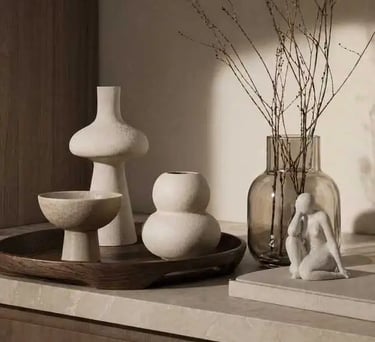
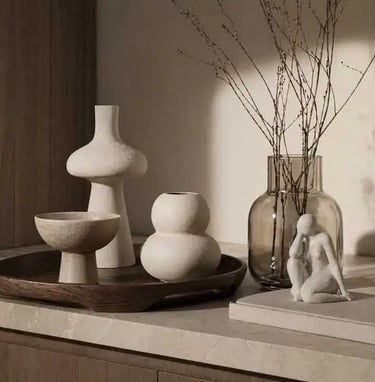
Décor in a contemporary kitchen is intentional and composed, combining functional objects with subtle statement pieces. Ceramic or stone vases in neutral tones may hold simple branches or fresh flowers, while wooden cutting boards and trays are often displayed against the backsplash as part of the visual composition. Sculptural objects or small decorative pieces can be introduced to add character, and in open-plan kitchens, minimal artwork or framed prints may be placed on adjacent walls to connect the space visually to the rest of the home. The key is to group items thoughtfully, allowing each piece to contribute without creating clutter.
Countertops
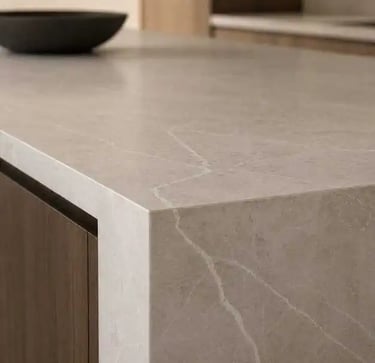
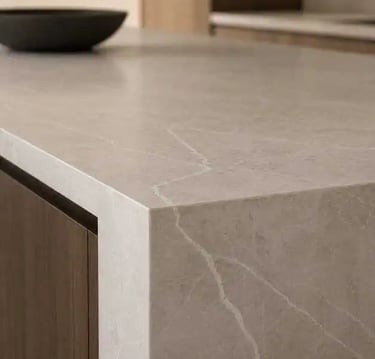
Countertops are a central feature of the kitchen, both functionally and visually. Materials such as quartz, marble, and granite are commonly used, with quartz being particularly popular for its durability and clean appearance. Light surfaces with subtle veining are often chosen to maintain brightness, while darker stone can be used to create contrast, especially on islands. A waterfall edge is a common detail in contemporary design, where the countertop extends down the sides of the island, creating a continuous and sculptural effect. Surfaces are typically kept clear to highlight the quality of the material.
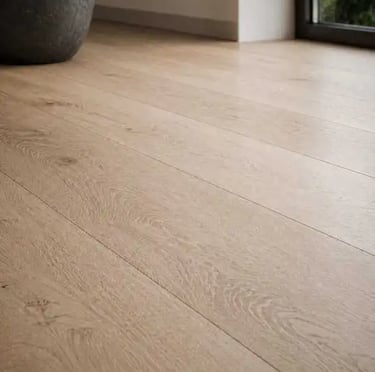
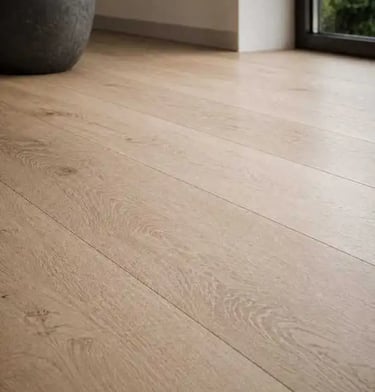
Flooring provides both durability and visual grounding in a contemporary kitchen. Natural wood flooring, particularly oak or walnut, is often used to create warmth and continuity with adjacent living spaces. For a more architectural look, large-format porcelain tiles with a stone effect or polished concrete can be used, offering a clean and modern finish. Matte or lightly textured surfaces are preferred to reduce glare and improve practicality, ensuring the floor supports both the aesthetic and functional needs of the space.
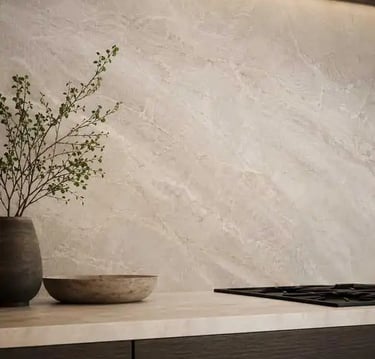
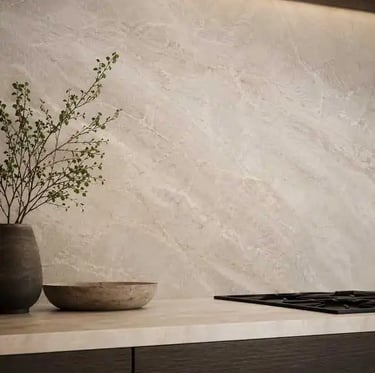
The backsplash is designed to maintain continuity and avoid visual interruption. A common approach is to extend the countertop material vertically into a full-height backsplash, creating a seamless and refined look. Alternatively, large-format tiles or vertically stacked tiles can be used to introduce a subtle texture while keeping grout lines minimal. Finishes are generally matte or softly reflective, ensuring that the backsplash complements the overall design without becoming a focal point on its own.
Backsplash
Flooring
Greenery
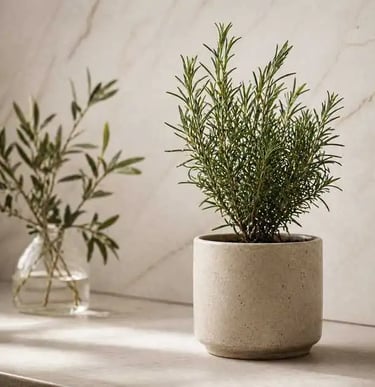
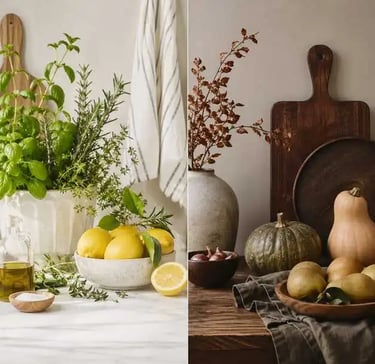
Greenery is introduced in a restrained and purposeful way to soften the structured environment of the kitchen. Small herb plants such as basil or rosemary are commonly placed near windows, while simple arrangements like olive branches in a ceramic vase can add height and movement. These elements are kept minimal and are typically housed in neutral containers that align with the overall material palette.

Seasonal Touches
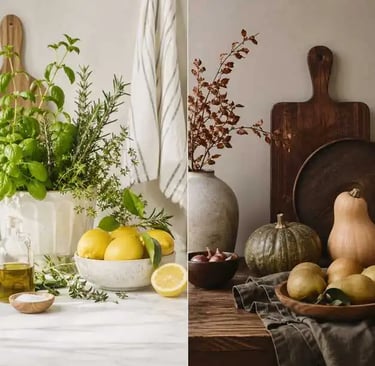
Seasonal changes are reflected through small, practical adjustments rather than major decorative shifts. Fresh fruits, herbs, or lighter materials can bring brightness during warmer months, while wooden elements, deeper tones, and more textured materials create a sense of warmth in cooler seasons. These updates remain subtle, allowing the kitchen to evolve naturally without disrupting its overall design consistency.
A contemporary kitchen is defined by thoughtful choices and disciplined design. By focusing on materials, layout, and functionality, it creates a space that is efficient, visually calm, and adaptable to everyday life, where every element has a clear purpose and contributes to a cohesive whole.